Contract Hijacking — When Brokers Try to Steal Deals Before Closing
What You Will Learn
Q. Is it illegal for a broker to bring another buyer after a contract is signed?
Q. Why does contract hijacking happen more often with ultra-luxury properties?
Q. What should a seller do if approached with a hijacking proposal?
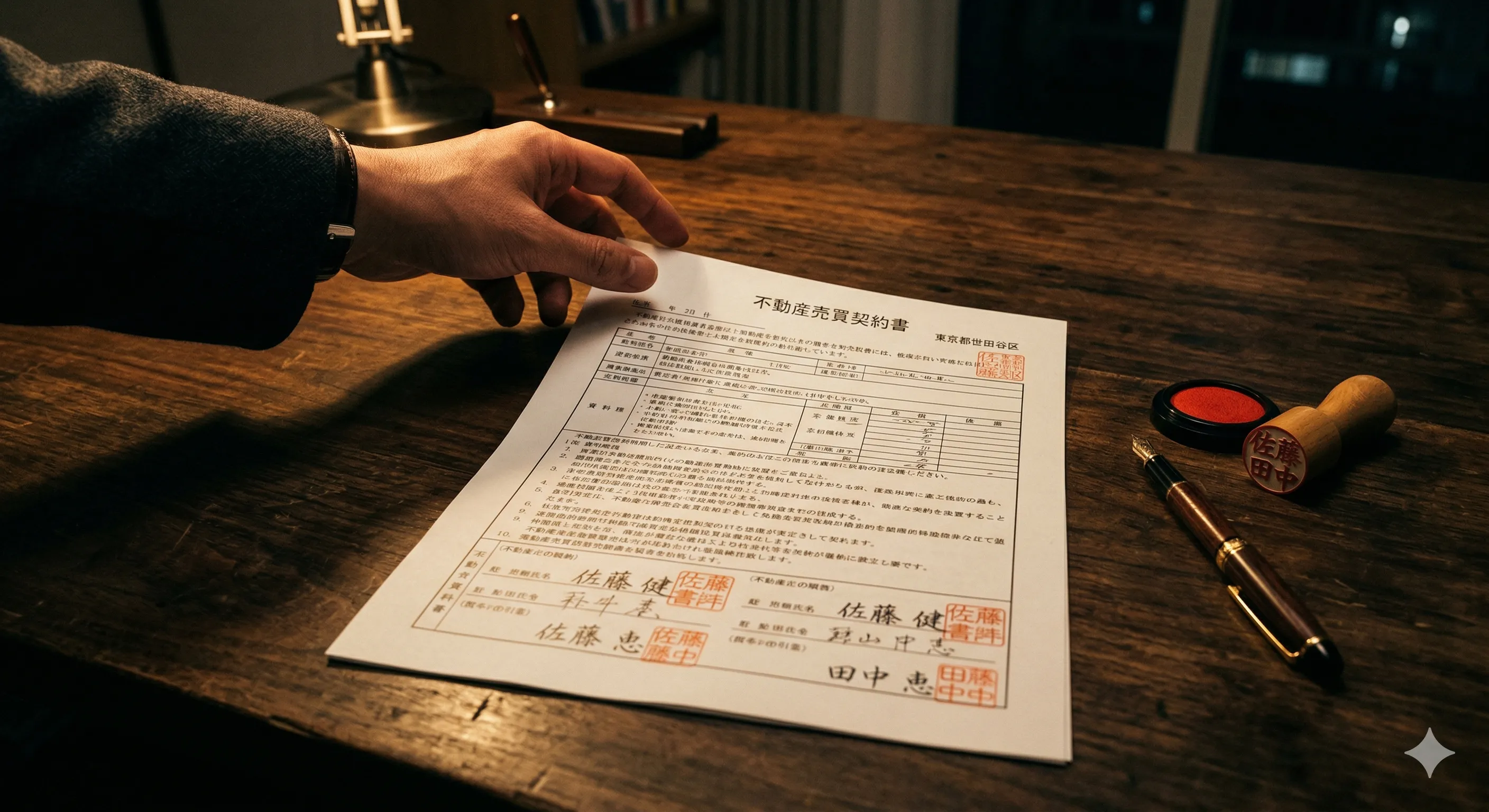
It was a high-value transaction. The seller was a private individual; the buyer, a licensed real estate dealer. The contract had been signed without incident. All that remained was closing — or so everyone thought.
Some time later, the seller contacted the brokerage firm. “I heard that I can cancel the contract by forfeiting the earnest money. Is that true?”
It was an alarming question. A seller suddenly asking about cancellation after signing — something was clearly off. Someone had been coaching the seller.
”You’re Trying to Steal Our Deal?”
The surprises didn’t end there.
The brokerage firm’s sales representative was summoned by the buyer’s firm. The first words out of their mouth: “What the hell is going on?!”
The situation was bewildering. When asked to explain, the buyer said:
“Word is going around the industry that a major publicly listed real estate company is buying the land we already have under contract.”
Investigation traced the rumor to a specific branch of the major firm. But the broker who had initially approached the seller was never identified.
The Gap Between Contract and Closing
In Japanese real estate transactions, there is typically a one- to two-month gap between signing the contract and closing.
Legally, the contract is binding. But title has not yet transferred. During this limbo period, hijackers make their move.
The approach is straightforward. They contact the seller and propose: “Even if you have to pay a penalty, I have a buyer who will pay more.” The goal is to overturn a signed contract and insert themselves as the new broker.
Earnest Money Forfeiture and Penalty Structures
Canceling a signed contract in Japan comes at a steep cost.
Earnest money forfeiture (手付解除). Before the other party has “commenced performance,” the seller can cancel by returning double the earnest money deposit (Civil Code Article 557, 民法557条). The buyer can cancel by forfeiting the earnest money.
What counts as “commencing performance”? Typical examples include arranging the remaining payment, preparing the property for handover, or procuring registration documents. Once performance has commenced, earnest money cancellation is no longer available. However, what qualifies as “commencement” depends on the contract terms and specific circumstances, and this is a frequently disputed point in practice.
Breach-of-contract cancellation (違約解除). Cancellation after performance has commenced constitutes breach of contract, triggering penalty clauses. Penalties typically range from 10% to 20% of the sale price. For high-value properties, penalties alone can reach tens of millions to hundreds of millions of yen.
The double-sale problem. If a seller sells to a different buyer without canceling the first contract, the party who registers title first acquires ownership (Civil Code Article 177, 民法177条). However, a third party who knowingly enters into such a transaction may be liable for tortious interference with contractual rights.
Why Hijacking Thrives in the Ultra-Luxury Segment
Why does this keep happening? Two structural reasons.
First, the sheer size of brokerage commissions. As discussed in the previous article, commissions on high-value properties are in a different league. Dual-agency commission on a 1 billion yen property (approx. $6.7M) comes to roughly 66 million yen (approx. $440K). For that kind of money, some brokers decide it’s worth interfering with a signed contract. If they can get the seller to pay the penalty and bring in a new buyer with themselves as broker, the entire commission is theirs.
Second, there is no “market price” at the ultra-luxury level. For residential properties with high transaction volumes, appraisals can be anchored to comparable sales data on REINS (Japan’s MLS equivalent). But for properties in the tens-of-millions-of-dollars range, comparables barely exist. Price is determined not by appraisal but by whether you can produce a buyer willing to pay. That’s why “I have someone who will pay more” is so effective — it’s nearly impossible to prove or disprove.
Moreover, as with bypassing the listing agent, the Real Estate Brokerage Act (宅建業法) contains no explicit prohibition against this practice. Civil liability for damages exists, but legal deterrence has its limits. Enormous commissions, the absence of market benchmarks, and a regulatory gap — though the industry considers it taboo, these three conditions converge in the ultra-luxury segment, and the temptation to hijack deals keeps recurring.
”Then Please Front the Penalty for Me”
In the end, this particular transaction closed without incident.
At the closing table, the seller confirmed that the approach had indeed happened. Someone claiming to be a broker had made contact, proposing: “Even if you have to pay the penalty, I have a buyer willing to pay a higher price.”
The seller’s response was perfectly measured: “Then please front the penalty for me.”
The broker never called back.
That single line exposed the true nature of contract hijacking. These brokers have no intention of bearing any risk themselves — they want the seller to take all the risk. That is who they really are.
But the deeper problem goes further. Suppose a seller had been persuaded by the broker’s sweet talk and actually canceled the contract. From that moment, the seller is in a weakened position.
A new buyer would immediately sense the seller’s vulnerability. “You’re in a hurry to sell, aren’t you?” — negotiating power shifts away from the seller entirely. Worse, these things become industry gossip instantly. Would any reputable broker or buyer want to deal with a property whose seller is known for backing out of signed contracts?
Even if the seller manages to cancel, the original brokerage commission obligation remains. Payment agreements typically state explicitly that “brokerage commissions are owed even if the contract is canceled,” and the purchase agreement itself usually contains similar provisions. Pay the penalty, pay the brokerage commission, and then get lowballed by the new buyer — the cost to the seller is far more than the hijacking broker’s smooth talk would suggest.
In the end, the broker orchestrating the hijack cares only about their own commission. Whether the seller ends up worse off is irrelevant to them.
That said, post-contract cancellations are extremely rare in practice. One veteran sales director at a brokerage firm stated flatly: “I have never once had a deal overturned after contract.” Normal players don’t do this. The brokers who try are the outliers.
Why Contract Hijacking Exists in a Gray Zone
Is contract hijacking purely predatory? The answer is not always straightforward.
Consider a case where a seller was manipulated into signing at an unfairly low price while cut off from market information. A condominium worth 150 million yen sold at half price — such cases do occur in reality. When property hoarding (囲い込み) or information manipulation prevents a seller from knowing the true market value, canceling the contract and re-signing at a fair price could be a legitimate remedy for the seller.
This is the structural dilemma of contract hijacking. The vast majority of cases are commission-driven interference. But in rare instances, it can serve a corrective function against distorted transactions. Perhaps that is precisely why the Real Estate Brokerage Act has never included an explicit prohibition. Of course, whether a hijacking broker genuinely has the seller’s interests at heart can be tested instantly with one simple request: “Then please front the penalty for me.”
The Fate of Brokers Who Meddle with Signed Contracts
In this industry, there are always brokers willing to cross the line for commissions — bypassing the listing agent, contract hijacking, and property hoarding. These are considered the three cardinal sins of the Japanese real estate industry, yet some exploit the absence of explicit legal prohibitions to operate in the gray zone.
But this is a small industry. Even in this case, the hijacking attempt was traced to a specific branch of a major firm. As the buyer’s furious confrontation showed, word always gets back to the parties involved. A broker may pocket one commission in the short term, but losing credibility in the industry means losing access to information and deal flow in the long run.
As noted in the previous article, displaced brokers can pursue damages in court. Legal risk, reputational damage, and industry isolation — the cost of contract hijacking far outweighs any single commission.
Articles on this site are based on hands-on industry experience and are not intended as individual investment advice.
Japan Real Estate Inquiries
Property introductions, valuations, transaction issues, tax matters — feel free to reach out about anything related to Japan real estate.
Contact Us