Why ¥7 Billion Can't Buy a Tokyo Tower View
What You Will Learn
Q. Can you buy a property with a Tokyo Tower view?
Q. Are all Tokyo Tower view properties this expensive?
Q. Can you buy an ultra-luxury property in Minato-ku with a ¥7 billion budget?
A post caught my eye the other day.
I want a unit in an ultra-luxury residence in Minato-ku with a Tokyo Tower view. I can go up to ¥7 billion (approx. $46 million).
¥7 billion. Even by our firm’s standards, that’s top-tier budget territory. I’ll be honest—the commission potential alone was enough to get my pulse up. I gathered the team and we kicked off an internal meeting.
The Allure of a Tokyo Tower View
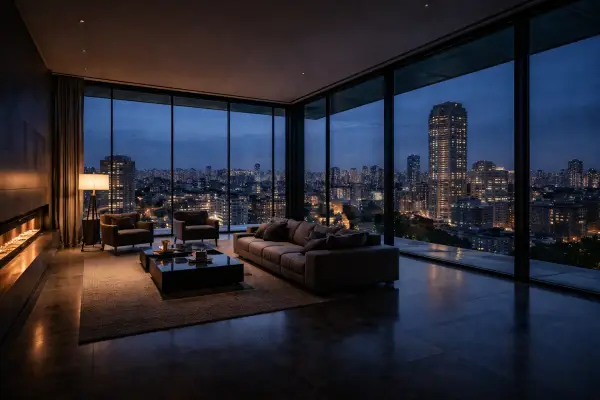
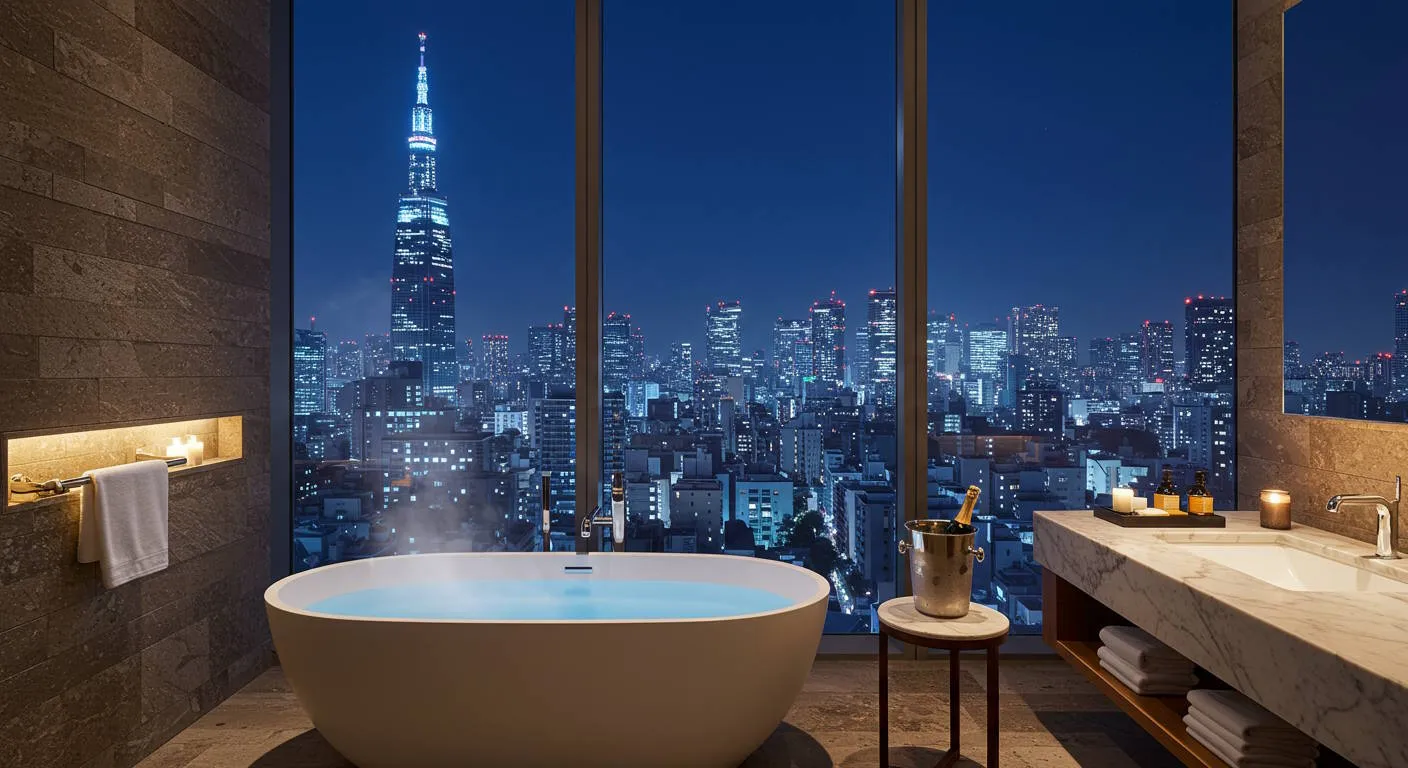
Multiple high-rise condominiums in Minato-ku offer units with Tokyo Tower views. That said, units providing a close-range, downward-looking perspective on the tower are exceptionally scarce. Landmark views are irreproducible—no new construction can replicate them.
What the client was after wasn’t just “a room with a Tokyo Tower view.” They wanted a unit in a specific ultra-luxury branded residence in Minato-ku—a hotel-branded, limited-unit, ultra-premium property with a direct Tokyo Tower sightline.
When we heard the ¥7 billion figure, we believed we could make this deal happen.
What the Internal Review Revealed
The team’s findings, however, far exceeded our assumptions.
First, some context: high-rise condominium transactions exceeding ¥3 billion (approx. $20 million) are rare in Minato-ku. A ¥7 billion budget is more than sufficient for even the most expensive penthouse in a standard high-end tower.
But the branded residence the client had in mind occupies an entirely different market tier. This type of property sits in a category fundamentally separate from conventional high-rise condominiums (see “What Is Ultra-Luxury Real Estate?” for how we define this segment).
Units with a Tokyo Tower view in that residence are virtually non-circulating. Current owners have no reason to sell, and even if one did come to market, it wouldn’t appear on any public listing. The probability of a seller emerging was, in our assessment, close to zero.
The pricing was in a different dimension. As a reference, a unit within the same residence with a Mt. Fuji view traded for approximately ¥6 billion (approx. $39 million). A close-range Tokyo Tower view is even rarer, placing the estimated transaction price at the ¥30 billion level (approx. $195 million). ¥7 billion is a top-tier budget in the ultra-luxury market, but it doesn’t reach this specific unit.
And even if a seller did materialize, further barriers remained. Under Article 30 of Japan’s Act on Building Unit Ownership (区分所有法), condominium management associations can establish rules governing unit owners’ mutual affairs—and ultra-luxury residences often use this provision to impose resale restrictions such as board approval and buyer-screening requirements. Beyond that, the complex contractual conditions unique to ultra-premium properties and severely limited access to valuation information made standard brokerage unfeasible.
No sellers, price out of reach, brokerage framework won’t work — a triple wall. We closed the case. “Why chase a property this complicated?” said our acquisitions lead. We have multiple off-market ultra-luxury properties where we maintain direct relationships with the owners. The commission windfall didn’t materialize, but the team’s knowledge base grew by one.
Takeaways from This Deal
- “Can’t buy” is a legitimate conclusion — Recognizing early that a property isn’t on the market or is beyond budget frees up judgment capacity for the next opportunity.
- Branded ultra-luxury residences and standard high-rise condominiums are different markets — Even with the same “Tokyo Tower view” label, the price tier varies enormously based on property grade.
- Estimate the cost of chasing non-circulating properties — When “wait” is the only strategy, the time and opportunity cost of pursuing that brokerage mandate deserves sober evaluation.
- Check management-rule constraints at the earliest stage — Under Article 30 of the Act on Building Unit Ownership, ultra-luxury residences may impose resale restrictions including board approval and buyer screening. These constraints should be confirmed before deepening any review.
This article is based on a true story, with details altered to prevent identification of individuals or properties. As a brokerage that holds no inventory, we believe in sharing the reasoning behind the deals we choose not to pursue.
Japan Real Estate Inquiries
Property introductions, valuations, transaction issues, tax matters — feel free to reach out about anything related to Japan real estate.
Contact Us