What Is Ultra-Luxury Real Estate? Price Ranges, Definitions, and How It Differs from Regular Property
What You Will Learn
Q. What price range qualifies as ultra-luxury real estate?
Q. What is the difference between luxury and ultra-luxury condominiums?
Q. Is ultra-luxury real estate primarily for investment or owner-occupancy?
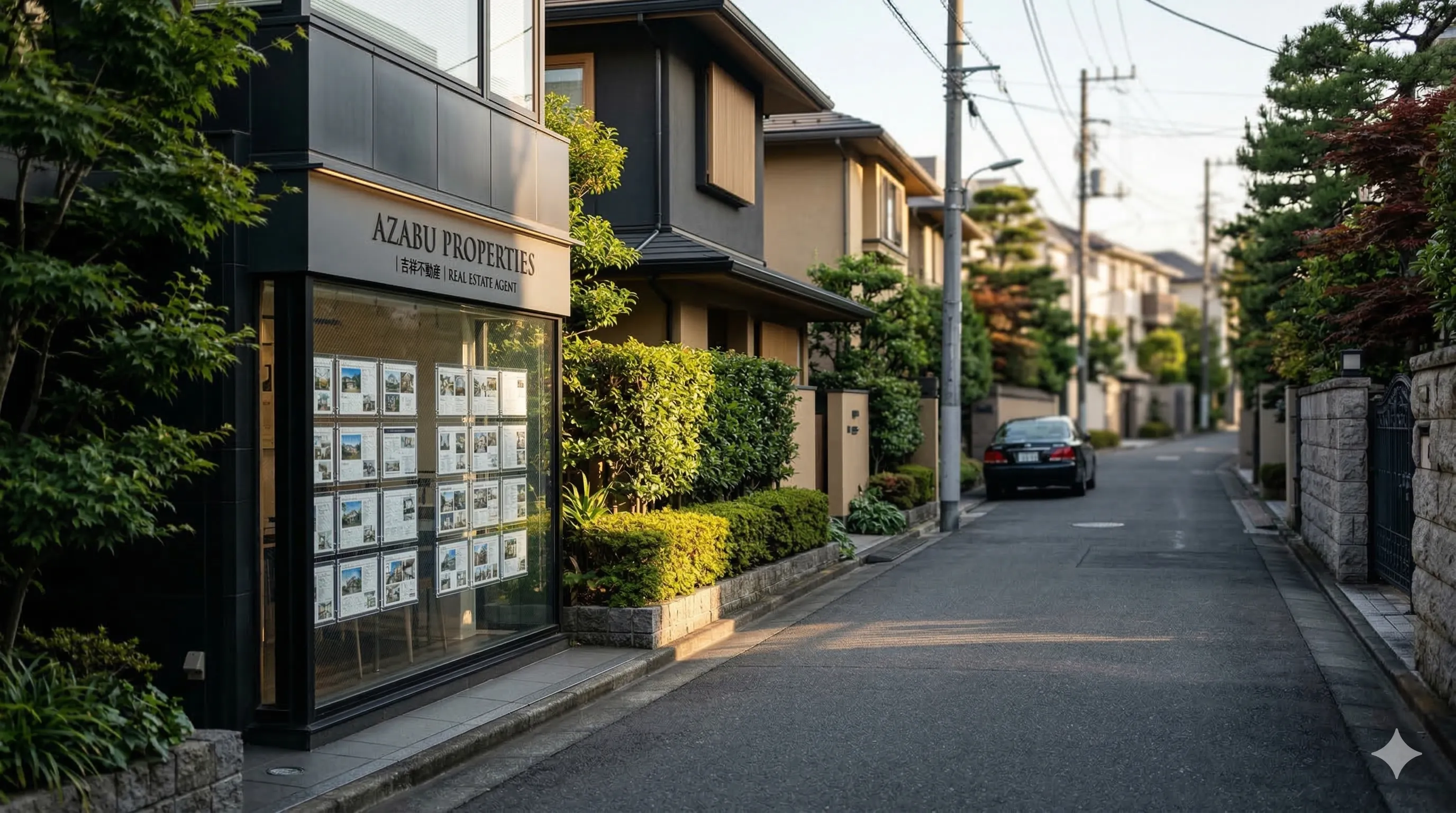
It’s an occupational hazard. Whenever I walk past a real estate agency, I can’t help glancing at the listings in the window. Around Azabu, you’ll see agencies on the main streets with their boards out. The condo prices are steep, certainly—but then it hit me. None of them clear ¥300 million.
You’ll see ¥298 million (roughly $2 million). That’s there. But nothing above ¥300 million. Even on the websites of firms that market themselves as luxury specialists, listings above ¥1 billion (approx. $6.5 million) are almost nonexistent. On REINS—Japan’s centralized property listing database used by licensed brokers—they start disappearing too.
Between “luxury properties” you can find on a major listing site and arrange a viewing with a single phone call, and “ultra-luxury properties” that never appear in public at all, there seems to be an invisible wall.
Where does “ultra-luxury” begin?
There is no industry-standard definition of “ultra-luxury real estate.” Some people draw the line at ¥500 million, others at ¥1 billion. The term exists in every market, but the threshold is different everywhere.
What I can say from handling transactions is that there’s a price point where everything changes. That line depends on the property type.
Condominiums start shifting around ¥300 million (approx. $2 million). That’s roughly where the transaction process begins to look different. Detached houses—maybe around ¥500 million (approx. $3.3 million). Land scarcity and location specifics come into play, and information gets even more restricted.
Whole buildings for investment? Honestly, I’m not sure where to draw the line. A mixed-use building in Azabu can run tens of billions of yen. In Ginza, even old buildings approach ¥10 billion (approx. $65 million). But “expensive” and “luxury” are different conversations.
What’s universal is this: past a certain price, brokerage behavior changes, buyer requirements increase, and the transaction itself becomes a different animal entirely. On this site, we use “ultra-luxury real estate” to describe properties in this “everything changes” tier.
Information closes off in layers
The standard real estate transaction in Tokyo is straightforward. The seller engages a broker. The property goes on REINS. It appears on major listing sites. Buyers search and inquire. Information is, in principle, open.
In ultra-luxury real estate, that chain breaks somewhere. The seller doesn’t want anyone to know the property is for sale. Concerns about revealing their financial situation, impact on neighbors, basic privacy. The reasons vary, but the result is the same: property information circulates only within a limited brokerage network.
And within that network, there are layers. A property might be well-known among brokers who routinely handle off-market deals, yet completely unknown to the average licensed agent. Because information is off-market, distribution channels are severely restricted. Intermediaries sometimes sit between brokers. Who you’re connected to directly determines the quality and volume of information you receive.
Ultra-luxury properties do appear on REINS from time to time. But when they do, there are reasons behind it. We’ll cover that in a future article.
Money alone won’t get you in
In a normal real estate transaction, anyone with the funds can essentially buy. In ultra-luxury, that’s not necessarily the case.
First, there are building management rules. Properties exist where the rules explicitly state that purchasers must hold Japanese citizenship, or that resale within a certain period is prohibited. These aren’t seller preferences—they’re regulatory prerequisites. If you don’t meet them, you can’t even enter the conversation.
Then there’s seller discretion. “I don’t want to sell to this person”—that holds weight in this world. Proof of funds is a given, but occupation, social credibility, and sometimes whether you have an introducer all come into play. This “screening” process differs from property to property and is often unwritten.
No comps, and it takes time
In the general market, you can find comparable sales data and pricing benchmarks relatively easily. REINS transaction records, government-published land price data, real estate appraisals. There’s plenty to reference.
In the ultra-luxury market, this data barely functions. Comparable transactions are scarce to begin with, and those that exist aren’t public. Even if another unit in the same building sold recently, finding out the price is difficult. Fair value judgments depend heavily on broker experience and information networks.
Transactions take time, too. A standard purchase might close in one to three months. Ultra-luxury deals taking over six months is not unusual. Confidentiality agreements, proof of funds, seller-side screening, management board approval, price negotiation. At any stage, the deal can reset—“actually, we won’t sell” or “we can’t sell to this buyer.”
The number of parties involved multiplies as well. It’s not just buyer, seller, and broker. Tax advisors, lawyers, asset management companies, sometimes even a bank’s private banking division get involved. Tax treatment changes depending on whether the purchase is corporate or personal. Required documents change based on the source of funds. For non-residents, procedures expand further. Coordinating everyone becomes a job in itself.
Why does a market like this exist?
This probably sounds like a lot of hassle. Why does the same asset class—real estate—operate so differently at this level?
The reason is simple: both sellers and buyers demand privacy and selectivity. Sellers don’t want their assets exposed to the general public. Buyers don’t want their purchasing intentions widely known. This mutual desire to stay invisible makes closed-network transactions rational.
But it goes beyond privacy. High-value properties attract fraud risks—including land title scams (jimenshi). Walk into a random real estate office and ask about ultra-luxury listings, and you’ll get nothing. Brokers screen their counterparts too. You don’t hand over information to someone whose background you can’t verify.
This structure presupposes the existence of trusted intermediaries. Precisely because information isn’t open, who you access the market through becomes the decisive factor.
What we cover on this site
On this site, we break down the ultra-luxury real estate world in depth. How REINS works, the reality of off-market properties, confidentiality agreements, the name-up process, proof of funds, viewing etiquette, choosing a brokerage, price negotiation, management board approval. All of these are things you actually encounter when dealing in ultra-luxury real estate.
If you’ve purchased high-end property before but haven’t ventured into ultra-luxury territory, understanding how this market differs before you step in is worth the time. Going in unprepared can mean stumbling at the very first step.
In a future article, we’ll look at REINS—the backbone of Japan’s real estate distribution system—and the structural reasons why ultra-luxury properties can’t be “searched for.”
Articles on this site are based on firsthand professional experience. They are not intended as individual investment advice.
Japan Real Estate Inquiries
Property introductions, valuations, transaction issues, tax matters — feel free to reach out about anything related to Japan real estate.
Contact Us