The Dead-End Residence: What a Diplomat Saw in Those 10 Meters
What You Will Learn
Q. What are the risks of a property on a dead-end street?
Q. Can high-end properties fall through for reasons other than price?
Q. What should be considered when proposing properties to diplomatic clients?
“It fell through.”
The voice on the other end of the line was flat, drained. It came from a broker I’d worked with for years. We had been running this deal together—co-brokering with one of his sales reps. Just two weeks earlier, the rep had been telling us, with no small amount of pride, “This one’s going to close.” The reversal felt sudden.
A Low-Rise Residence in Prime Territory
The property itself was, frankly, compelling. A low-rise reinforced-concrete apartment building in one of Tokyo’s most prestigious areas—a quiet neighborhood dotted with foreign embassies. Over 30 years old, yes, but sitting on a generous plot with ample floor area. Only a handful of units. Elevator, auto-lock entry. A ground-floor tenant was generating income; the owner occupied the upper floors. Multiple train lines within walking distance. Nothing to complain about on convenience.
The zoning permitted mid-to-high-rise development with generous density allowances. Considering the land’s potential, redevelopment options were wide open. Freehold. Inspection certificate on file. Boundaries confirmed. The seller wanted a leaseback arrangement, which left some room for negotiation on handover terms—but even that had been moving toward resolution.
A whole-building hold combining personal use and rental income. Properties like this rarely surface off-market. We had high hopes.
”There’s No Way Out”
When I heard the reason for the rejection, I was speechless for a moment.
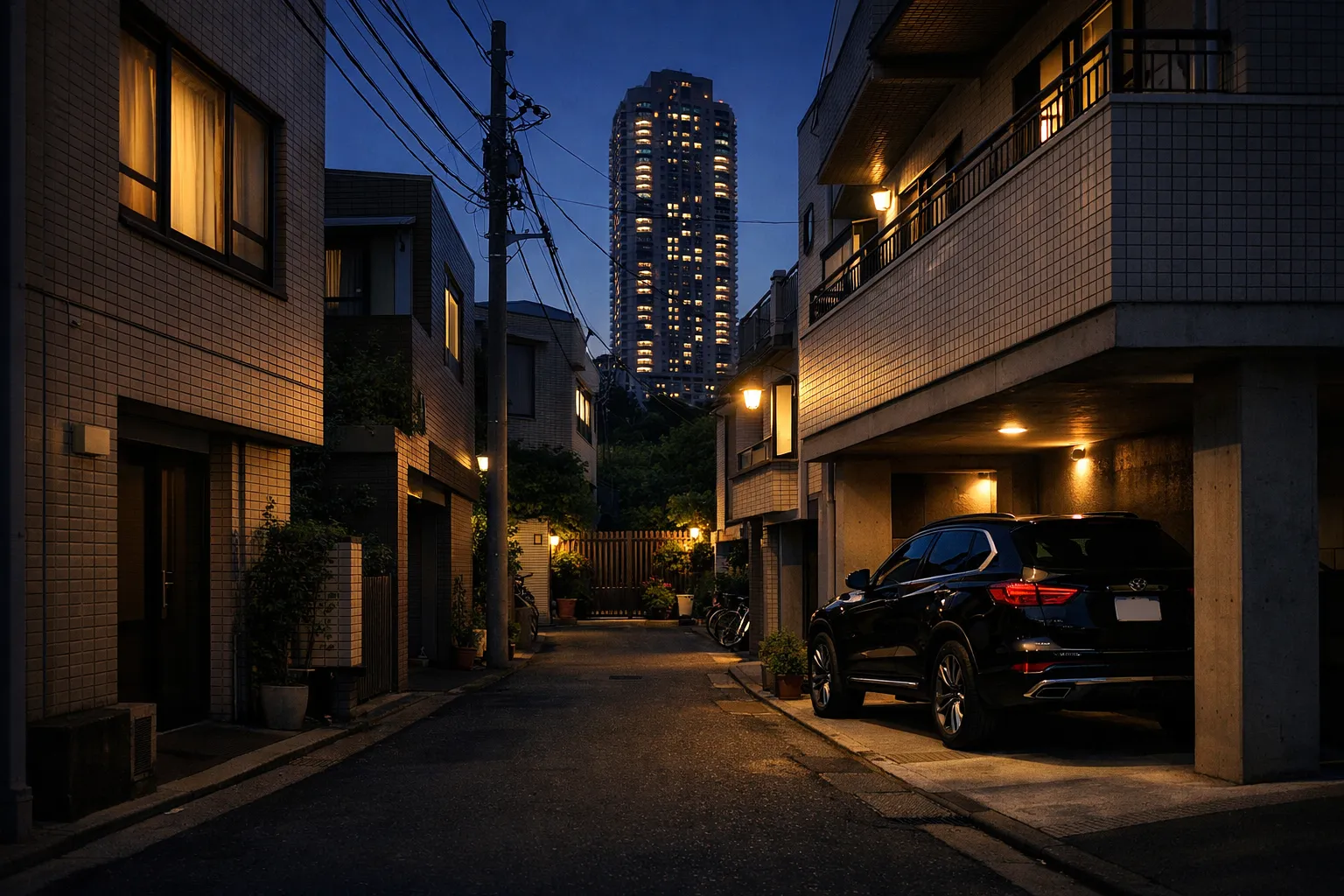
The client was a diplomat stationed in Tokyo. The review process had been proceeding smoothly, but at the final stage, one condition surfaced: the street fronting the property was a dead end, roughly four meters wide. The distance to the main road was barely 10 meters. By any normal standard, this would be a non-issue.
But the client’s conclusion was unambiguous: “A dead end means there’s no escape route.”
It was a security concern, they said. In a cul-de-sac where you can’t even turn a vehicle around, evacuation would be compromised if anything happened. No further details were shared. Everything remained a mystery.
Whether the client had intended to hold it as an investment or live there personally was never made clear. But one thing was certain: in the world of diplomacy, there exists a distinct set of risk-assessment criteria—and those criteria extend all the way to real estate site selection.
It wasn’t about price. It wasn’t about building age. It wasn’t about title. The shape of the frontage road—a factor that brokers typically evaluate only in terms of “does it meet Article 43 of the Building Standards Act?”—decided the fate of this deal.
At the end of the call, my broker contact said: “I suppose when you’re dealing with diplomats, there are non-negotiable conditions that people like us simply can’t understand.” I couldn’t agree more. In another deal, a high-rise tower with excellent transit access and panoramic views was passed over by the diplomatic community for being an “island” (“Why the Center of Minato Ward Isn’t Always the Center of the World”).
Takeaways from This Deal
- “Who will live there” changes every priority — The same property can have a fatal flaw depending on the occupant’s profile. As brokers, we need to anticipate differences in risk sensitivity based on a buyer’s background.
- Don’t evaluate frontage roads on legal compliance alone — Article 43 of Japan’s Building Standards Act requires a building’s plot to front a road at least 4 meters wide by at least 2 meters. Enforcement Order Article 144-4 sets standards for dead-end roads—maximum length of 35 meters, vehicle-turning areas, and so on—but these are minimum regulatory requirements, not measures of practical usability or security. Dead ends, steps, slopes, vehicle-turning clearance—all of these should be assessed beyond the legal minimum.
- Security can outrank location — Even a prime address won’t be chosen if it fails to meet security requirements like evacuation routes and sightlines. This perspective is essential when advising high-net-worth individuals and diplomatic clients.
- Price isn’t always why deals fall through — When a high-end deal collapses, we tend to assume it was about money. But non-price factors kill deals more often than people think. The broker’s skill lies in reading the conditions a client won’t—or can’t—articulate.
This article is based on a true story, with details altered to prevent identification of individuals or properties. As a brokerage that holds no inventory, we believe in sharing the reasoning behind the deals we choose not to pursue.
Japan Real Estate Inquiries
Property introductions, valuations, transaction issues, tax matters — feel free to reach out about anything related to Japan real estate.
Contact Us