Land (Development Sites)
Off-market development sites and vacant land in Minato-ku and Shibuya-ku. Interim-use sites, land with aging structures, and multi-building bulk acquisitions from hundreds of millions to tens of billions of yen.
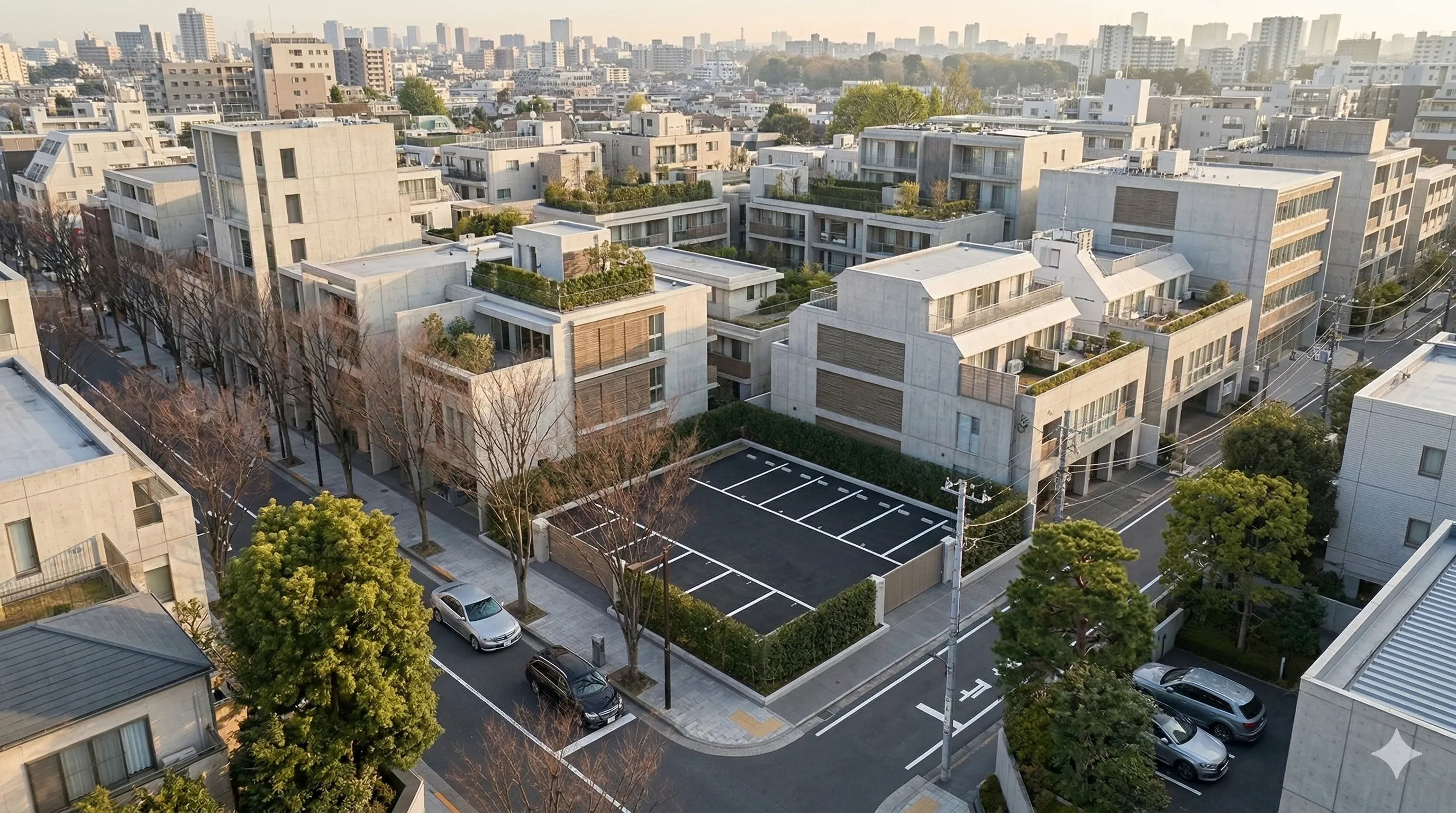
Development Sites & Vacant Land
Off-market urban development parcels from ¥hundreds of millions to ¥tens of billions
In the prime districts of Minato-ku and Shibuya-ku, land intended for new development or rebuilding circulates off-market.
Sellers of such land face circumstances ranging from inheritance to corporate restructuring to asset rebalancing. What they share is the desire to “sell quietly and reliably.” They don’t want neighbors or tenants to learn of the sale, and they want to avoid contact from unknown brokers. The higher the value of the land, the stronger this tendency — and the information flows only through limited, trusted channels without appearing on REINS (the broker-to-broker property information network).
The valuation of development land is determined not by its current state but by “what can be built.” Zoning, floor area ratio (FAR), building coverage ratio (BCR), height districts, shadow regulations, and district plans — the combination of these public law restrictions defines the achievable gross floor area and use after rebuilding, and ultimately determines the land’s value.
Based on the development sites we have handled, here is what defines this category.
3 Types of Development Sites
Type 1: Interim-Use Sites (Parking Lots, Storage Yards, etc.)
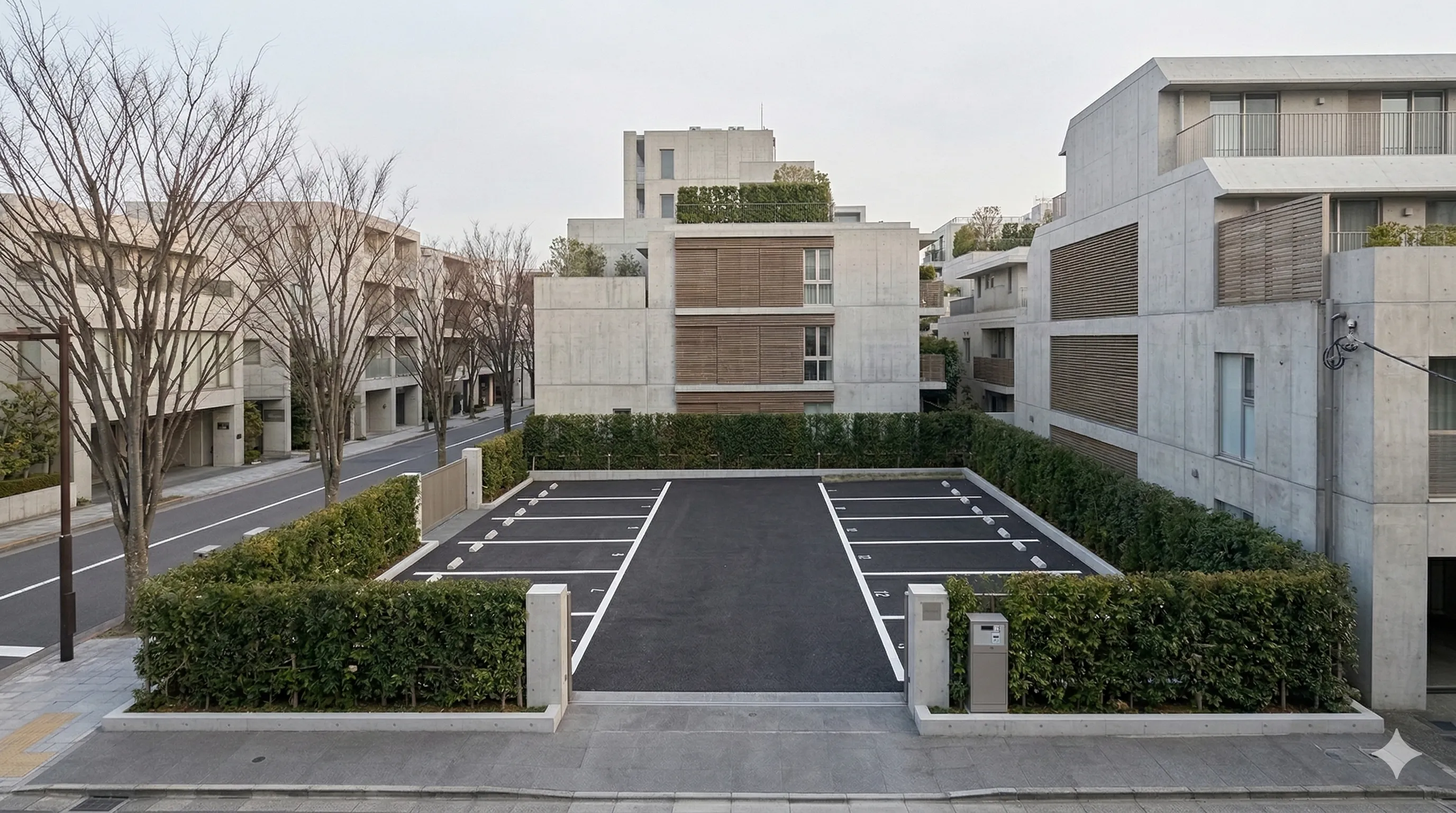
Land where existing buildings have been demolished and the site is being used temporarily as monthly parking, coin parking, or material storage. This is the most accessible form of development land.
Common characteristics:
- No demolition required — design and building permit application can begin immediately after acquisition
- Many properties have completed boundary surveys with finalized boundary lines
- Sellers may not be in a hurry due to interim rental income
- In areas with district plans, additional restrictions may apply to building use and form
- Front road width may limit FAR below the designated ratio
While the absence of existing structures eliminates demolition costs, there is a possibility that underground remnants from former buildings (foundation piles, water tanks, etc.) remain. Pre-transaction site history investigation and seller disclosure regarding subsurface obstacles are critical decision factors.
Type 2: Land with Aging Structures
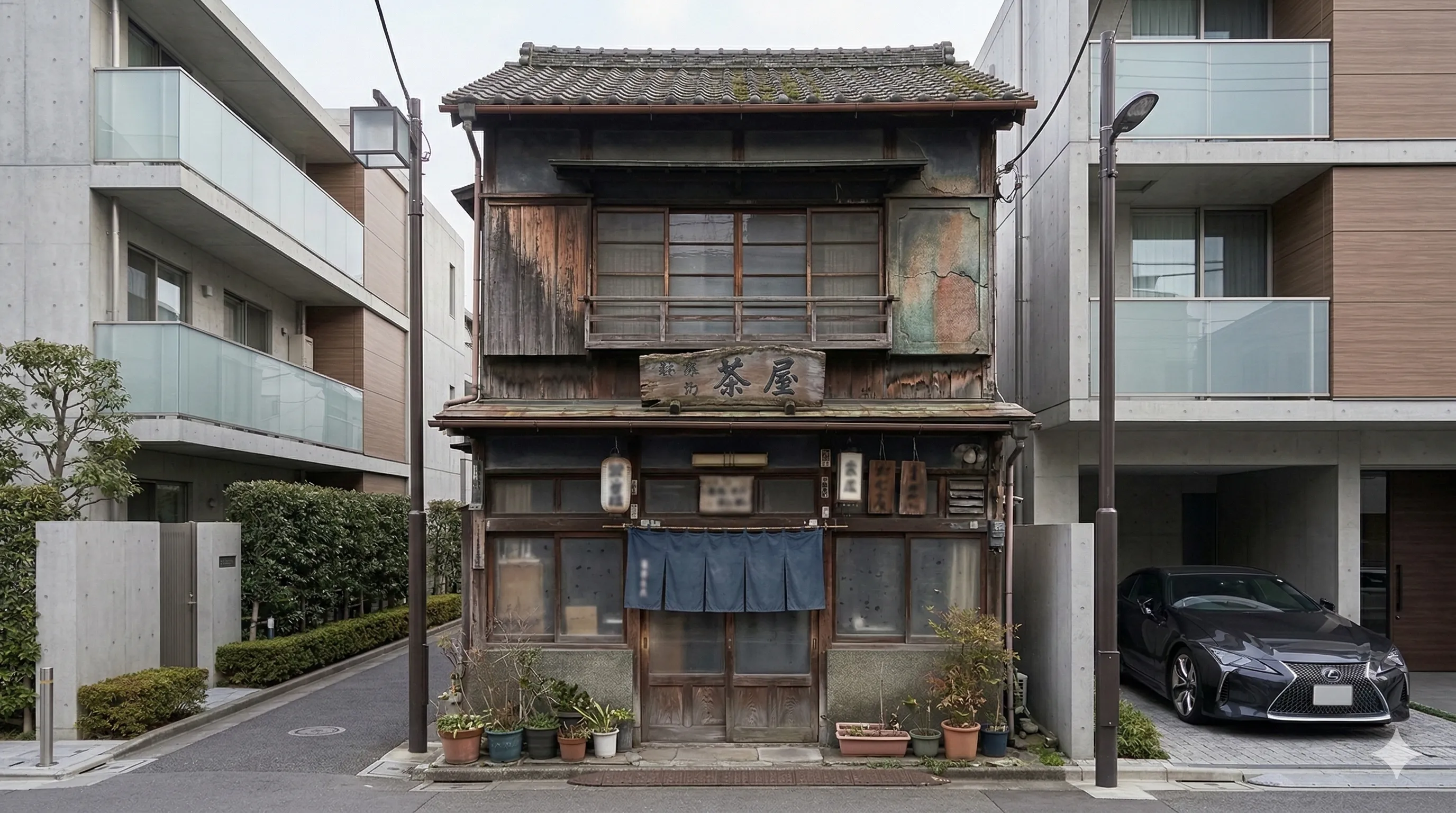
Properties where existing buildings remain but have virtually zero economic value, effectively trading at land value. Buyers acquire with demolition as a given.
Features of this type:
- Buildings over 30 years old in wood, steel, or RC construction, with advanced deterioration
- Buildings may have been (or currently are) used as residences, shops, or apartment complexes
- Where tenants remain, negotiation for vacancy as a delivery condition is required
- Some properties lack building inspection certificates, limiting options for reusing existing structures
- Sites requiring setback (road boundary retreat) have effective lot area smaller than registered area
In pricing land with aging structures, demolition cost estimates become a key negotiation tool. RC and SRC demolition costs several times more than wood-frame, and asbestos-containing material removal may add further expense. Deducting these costs from the purchase price is standard practice.
For properties with remaining tenants, the vacancy completion schedule and provisions for delays become critical points in the sale agreement. Standard lease agreements carry the risk of prolonged eviction negotiations, affecting the entire transaction timeline.
Type 3: Multi-Building Bulk Acquisitions
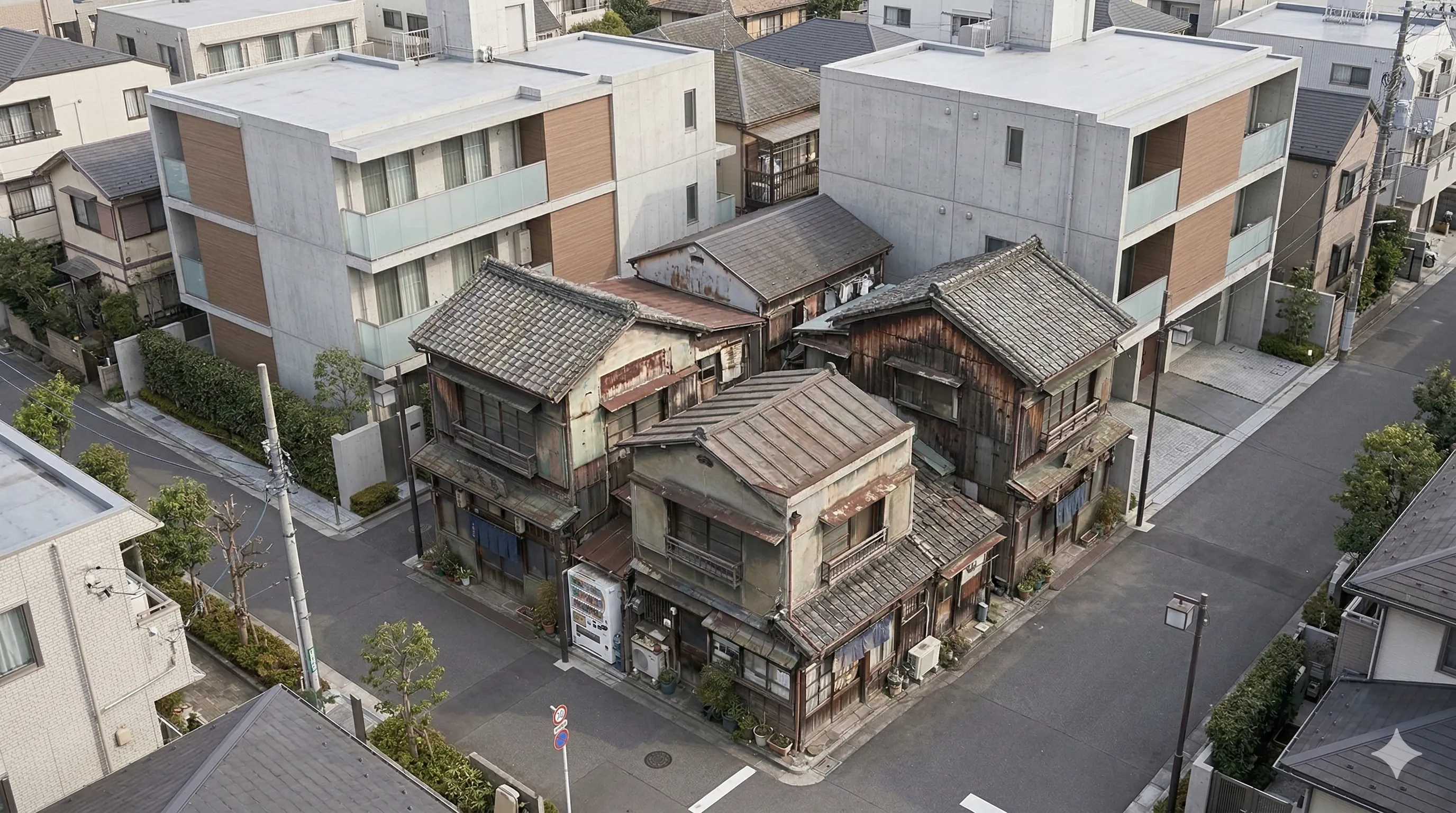
Development parcels comprising multiple land lots with multiple buildings — sizable assembled sites. Bulk transactions give buyers freedom for large-scale development while allowing sellers to avoid the complexity of individual sales.
Common characteristics:
- Total site area often exceeds 330㎡ (100 tsubo)
- Existing buildings vary in age, construction type, and use across multiple structures
- Sites may straddle multiple zoning categories, requiring proportional FAR calculation
- Some buildings may be partially tenanted, requiring significant time to achieve full vacancy
- Individual buildings may have extensions or unregistered portions requiring verification against registry records
Bulk deals require precise evaluation of both the land’s latent development potential and the hurdles to realizing it (multi-building demolition, tenant evacuation, complex regulatory analysis). Volume studies (maximum achievable gross floor area analysis) require coordination with architectural firms.
Large-scale assembled sites in premium central Tokyo residential areas have extremely limited annual transaction volume and represent the highest level of information confidentiality.
4 Evaluation Axes for Development Sites
1. Effective FAR Assessment
The single most important factor in development land valuation is the actually achievable floor area ratio. Even with a high designated FAR, narrow front road width may impose a lower limit calculated as road width × statutory multiplier (4/10 for residential, 6/10 for others), significantly undercutting the designated FAR.
When a site straddles multiple zones, the base FAR must be calculated through area-weighted proportional averaging. Sites spanning commercial and residential zones frequently yield allowable FARs well below expectations. This effective FAR difference directly impacts post-rebuilding gross floor area = leasable area = revenue, and therefore significantly affects land per-tsubo valuation.
2. Height District and Shadow Regulation Constraints
FAR alone does not determine buildable volume. Height district classifications limit building height, and shadow regulations control how shadows fall to the north.
Even at the same FAR, different height district classifications change the achievable number of stories and floor plate sizes, making volume studies at the design stage essential. In residential zones especially, absolute height limits, height districts, and shadow regulations apply cumulatively, creating situations where the designated FAR cannot be fully utilized.
3. District Plans and Additional Ordinance Restrictions
In major central Tokyo areas, district plans are commonly established in addition to zoning, specifying additional use restrictions, wall setback requirements, and maximum height limits. Furthermore, ward-level ordinances (community development ordinances, one-room apartment regulations, landscape ordinances, etc.) apply cumulatively, meaning buildable use and scale cannot be determined from zoning information alone.
4. Road Access Conditions and Effective Lot Area
Whether the front road is public or private, whether its width requires setback, whether corner lot bonuses apply — these access conditions directly impact building plan flexibility and bank collateral valuations.
Sites fronting Article 2 roads have setback portions excluded from effective lot area, creating discrepancies between registered and actually buildable area. Divergence between registered and surveyed areas is not uncommon in older properties, making confirmation of boundary survey availability and land area correction registration status essential.
For Those Considering a Purchase
Off-market development sites and vacant land are not listed on general real estate search sites, in order to protect seller privacy and maintain transaction confidentiality. Property summaries typically state explicitly: “For your firm only — please refrain from sharing with other parties.”
We handle multiple development sites across Minato-ku and Shibuya-ku — from interim-use sites to land with aging structures to multi-building bulk acquisitions. For interested parties, detailed information is disclosed following execution of a confidentiality agreement (CA).
Frequently Asked Questions
- What types of off-market development sites are available?
- There are three main types: interim-use sites (parking lots, storage yards), land with aging structures, and multi-building bulk acquisitions. All remain off-market due to seller circumstances.
- How is development land priced?
- Value is determined not by current state but by development potential. The combination of zoning, floor area ratio, building coverage ratio, height districts, and shadow regulations defines achievable floor area and use, ultimately determining land value.
- How can I obtain property information?
- Detailed information is disclosed after executing a confidentiality agreement (CA). Please contact us through our inquiry form.
Inquire About Properties
Detailed information is disclosed following execution of a confidentiality agreement (CA). Please feel free to contact us.