Income Properties (Whole Buildings)
Off-market whole-building income properties in Minato-ku and Shibuya-ku. Mixed-use, commercial, residential-retail, and development projects — unlisted on REINS, disclosed under confidentiality agreement.

Whole-Building Income Properties
Off-market investment deals from ¥hundreds of millions to ¥tens of billions
For real estate investors looking beyond individual condominium units, whole-building income properties represent the next tier. However, when it comes to well-located whole buildings in Minato-ku, Shibuya-ku, and Chuo-ku at the several-hundred-million to multi-billion yen scale, publicly listed inventory is limited.
Sellers of high-value properties prefer “quiet transactions.” They don’t want tenants or neighbors to know about the sale, and they want to avoid approaches from unknown brokers. This is why “off-market” whole-building income properties exist — circulated only through trusted channels.
Based on the whole-building properties we have handled, here is what defines this category.
4 Types of Whole-Building Income Properties
Type 1: Mixed-Use (Retail/Office/Residential)
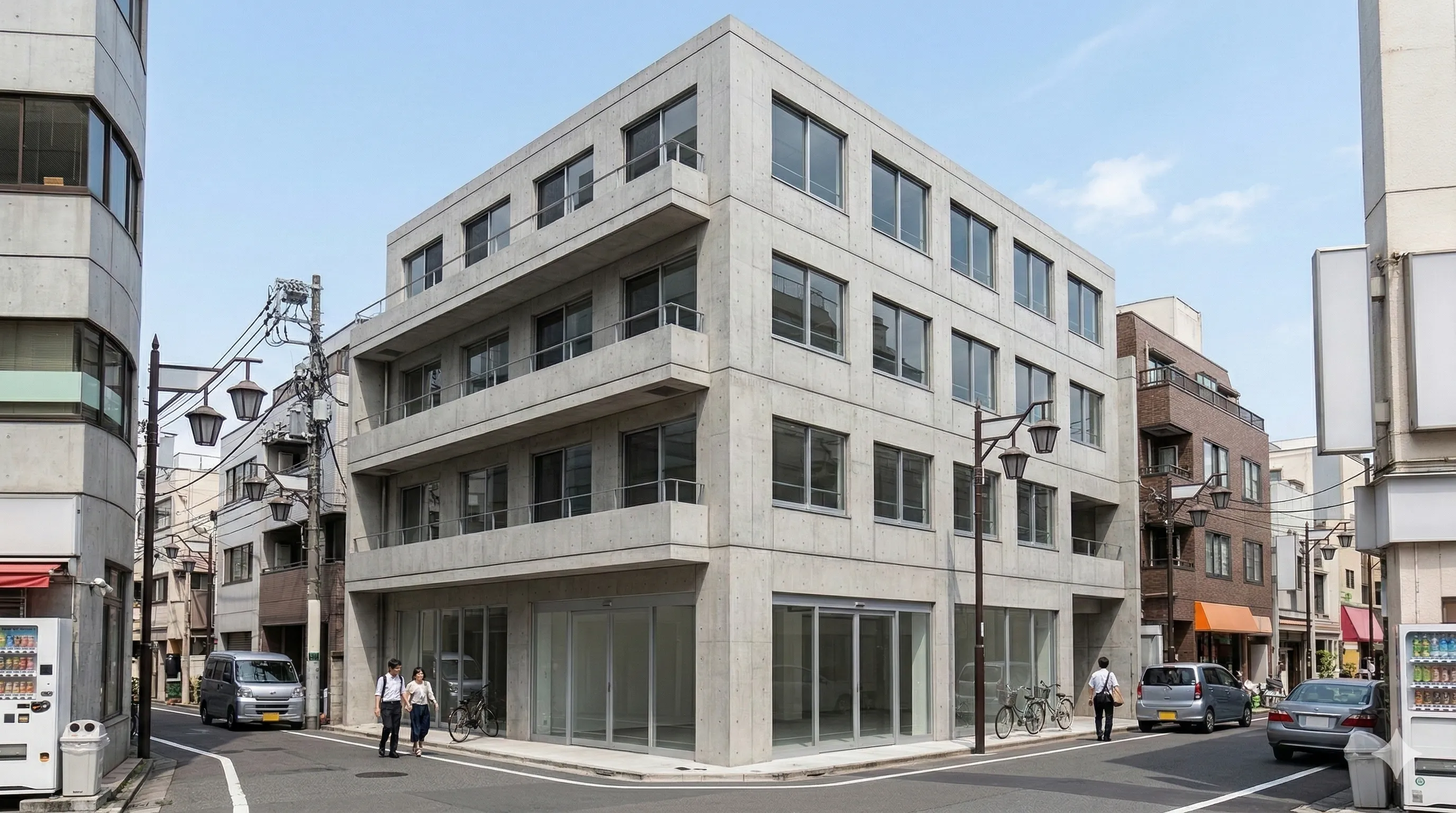
Mixed-use whole buildings with retail, office, and residential tenants across multiple floors. Typically RC construction, 5–6 stories, with 200–600㎡ total floor area. The standard configuration is ground-floor retail with offices or residential units above.
Common characteristics:
- Vacancy risk mitigated through diversified rental income across multiple tenants
- Mix of fixed-term and standard lease agreements is typical
- Properties with building confirmation and inspection certificates are central to our portfolio
- Buildings with major renovation history retain room for lease-up (rent increases)
Properties where the gap between current gross yield at full occupancy and projected post-lease-up yield is significant attract attention from asset management firms and funds seeking revenue improvement through rent optimization.
Type 2: Retail-Only (Commercial Buildings)
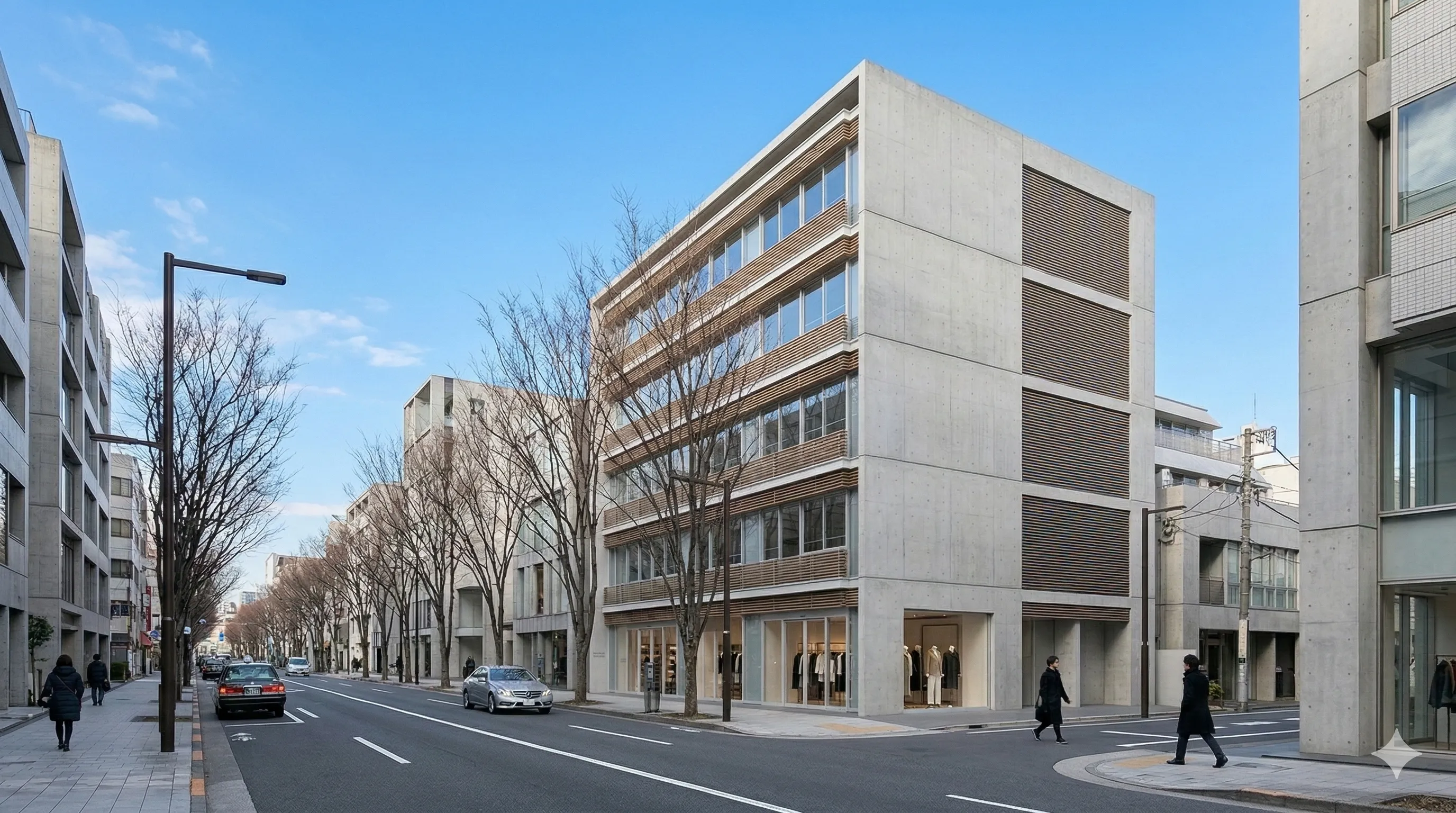
Commercial buildings where all floors are retail spaces, occupied by restaurants, lounges, bars, and other commercial tenants. Primarily located along arterial roads and in entertainment districts.
Key features:
- High-visibility locations along arterial roads with over 25m width
- Multi-level configurations including basement floors, with different business categories per floor
- Some properties operated entirely under fixed-term lease agreements
- Wide road frontage enabling significant floor area ratio utilization upon rebuilding
Commercial buildings carry higher tenant turnover risk compared to residential, but in the right location, per-tsubo rent can far exceed residential levels. Properties in fire prevention zones and neighborhood commercial zones may qualify for 100% building coverage ratio, offering substantial volume advantages upon rebuilding.
Type 3: Residential/Retail Mixed (Small to Mid-Size)
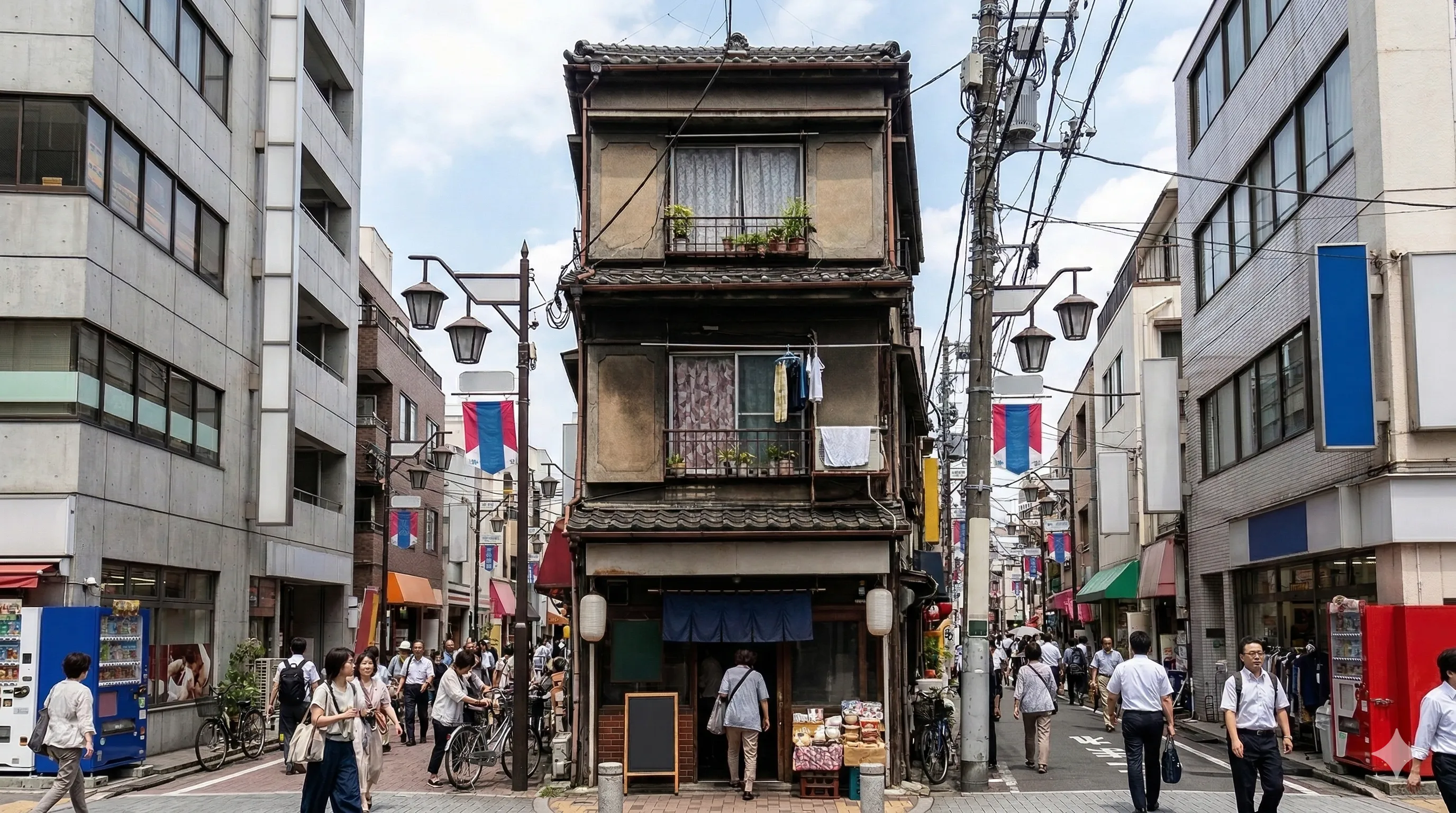
Small to mid-size whole buildings with retail on the 1st–2nd floors and residential units above. Typically RC construction, 3–6 stories, around 300㎡ total floor area.
Features of this type:
- Many properties within 1–3 minutes’ walk from stations
- Combines stable residential income with higher-yielding retail revenue
- Properties straddling neighborhood commercial and residential-only zones require attention to differing building coverage ratios, floor area ratios, height districts, and shadow regulations per zone
- Focus on properties with building inspection certificates
When a site straddles two zoning categories, rebuilding requires proportional calculation of the base floor area ratio. Some properties have neighborhood commercial zoning extending just 20cm from the road edge with residential-only beyond — precise investigation is required for volume studies.
Type 4: Development Sites / Rebuilding Opportunities
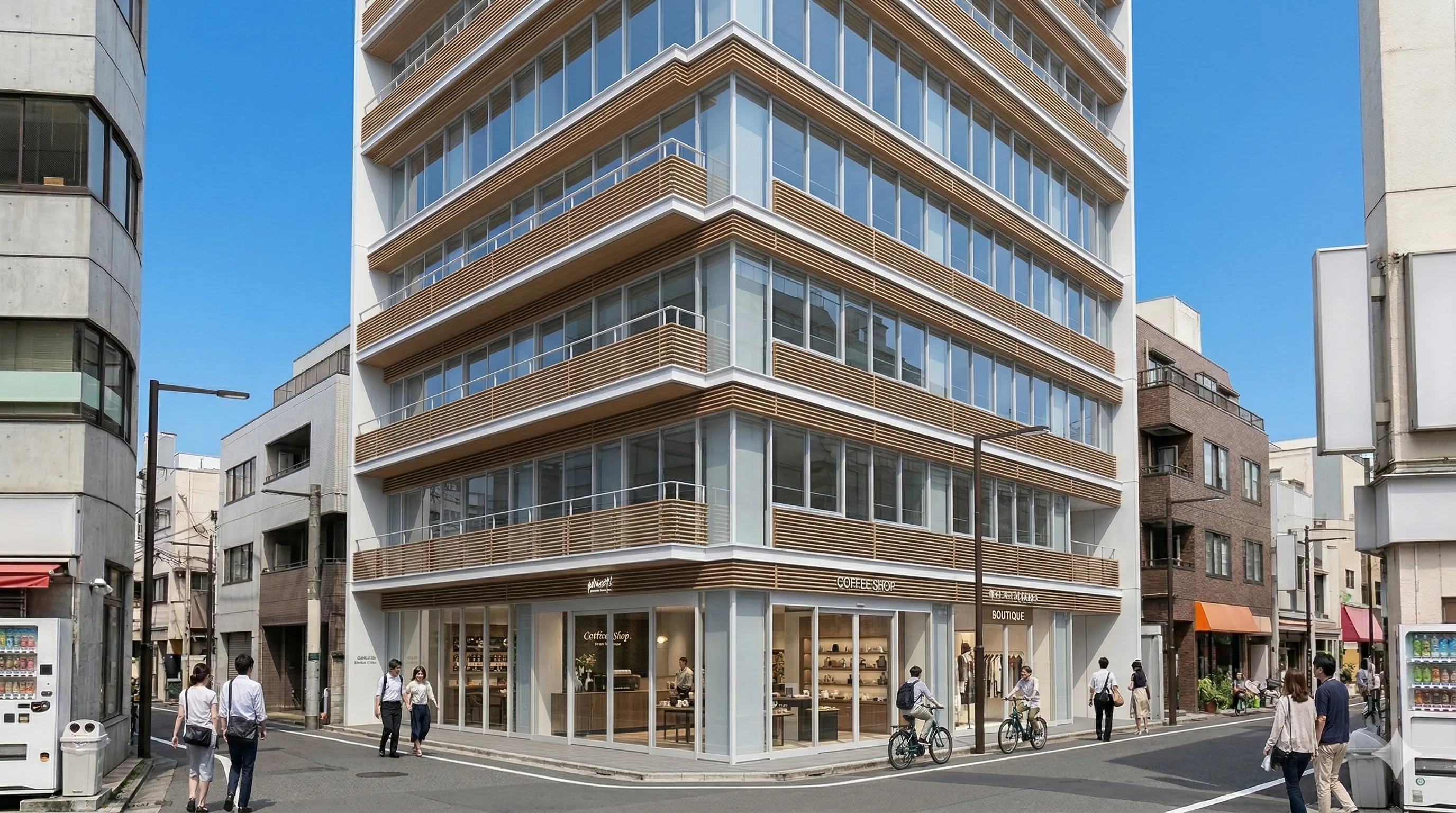
Land with existing buildings where the premise is maximizing revenue through rebuilding. This property type targets developers, asset management firms, and funds.
Common characteristics:
- Accompanied by reference rebuilding plans from architectural firms
- Plans assuming ceiling heights of 3,500mm or more, ensuring versatility for office and retail use
- Floor area ratio utilization studies provided (some plans exceed 90% utilization)
- Post-completion projected rent and yield simulations included
Evaluation is predicated not just on current income but on “what revenue potential exists if the site is cleared and rebuilt.” In commercial zones with 500–700% floor area ratios, opportunities exist to double revenue by replacing low-rise structures with high-rise development.
3 Evaluation Axes for Whole-Building Income Properties
1. Location and Zoning-Based Revenue Potential
The value of a whole-building income property cannot be measured by current rental income alone. The combination of zoning, floor area ratio, building coverage ratio, and height district determines how much floor area can be realized upon rebuilding. The same land area in a neighborhood commercial zone at 400% FAR versus a residential-only zone at 300% FAR produces vastly different future revenue potential.
2. Tenant Mix and Lease Structure
Fixed-term and standard lease agreements have entirely different risk profiles. Fixed-term leases allow easier tenant replacement at expiry with clear rent revision opportunities, but carry tenant departure risk. Standard leases offer stable occupancy but higher hurdles for rent increases. When scrutinizing the rent roll, each tenant’s contract type, term, and per-tsubo rent must be individually verified for appropriateness.
3. Building Compliance
The presence of building confirmation and inspection certificates directly impacts bank financing assessments. Older buildings sometimes lack inspection certificates, which can disadvantage refinancing or resale. We confirm the certificate status of all properties before handling.
For Those Considering a Purchase
Off-market whole-building income properties are typically accompanied by property summaries explicitly stating: “For your firm only — please refrain from sharing with other parties.”
We handle multiple whole-building income properties across Minato-ku, Shibuya-ku, and Chuo-ku — from mixed-use retail/office buildings to development sites. For interested parties, detailed information is disclosed following execution of a confidentiality agreement (CA).
Frequently Asked Questions
- What are off-market whole-building income properties?
- Properties not listed on REINS or general investment property sites due to tenant considerations and the risk of sale information leakage. Information flows only through channels close to the seller.
- What is the most important metric for evaluating income properties?
- Beyond gross yield, NET yield considering vacancy rates, management costs, and repair expenses is crucial, along with remaining building lifespan and legal compliance. The presence of a building inspection certificate significantly affects financing conditions.
- Is a confidentiality agreement required for purchase?
- Yes. Detailed off-market property information is disclosed only after executing a confidentiality agreement (CA). This is a mandatory procedure to prevent information leakage to tenants and neighbors.
Inquire About Properties
Detailed information is disclosed following execution of a confidentiality agreement (CA). Please feel free to contact us.