Resort Hotel Development Sites
Off-market resort hotel development sites near Fuji Five Lakes, Hakone, and Karuizawa. Large-scale parcels from thousands to over 10,000 tsubo, with Natural Parks Act and landscape regulation analysis.
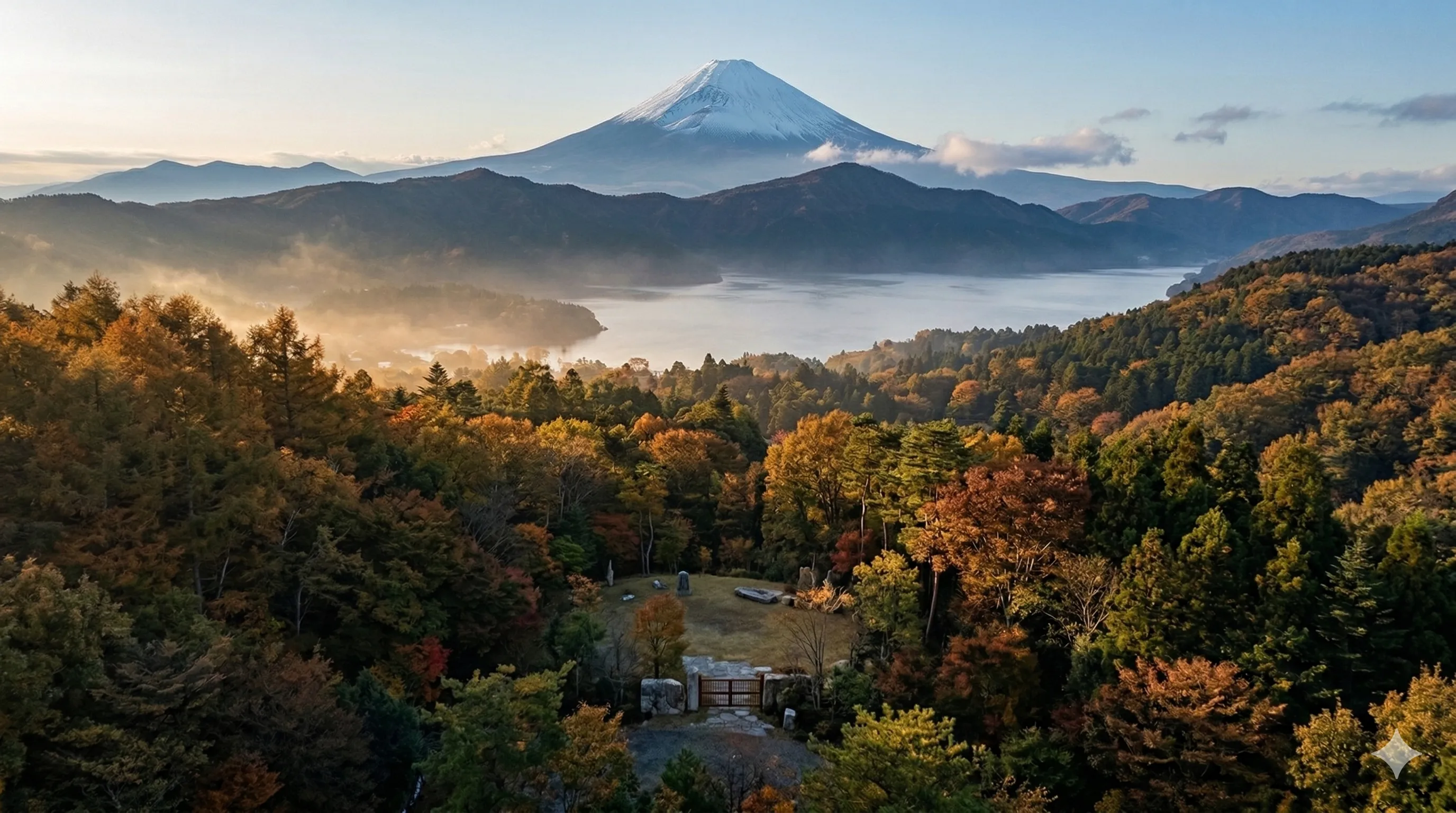
Resort Hotel Development Sites
Off-market development parcels from thousands to over 10,000 tsubo
Against the backdrop of recovering inbound tourism demand and shifting travel preferences among high-net-worth individuals, interest in hotel development sites in resort areas is surging. However, when it comes to development-ready land of several thousand to over 10,000 tsubo in Japan’s premier resort areas — the Fuji Five Lakes region, Hakone, Karuizawa — virtually none of these properties appear on general real estate search sites or even on REINS (the broker-to-broker property information network).
Sellers of such large-scale land are often local notables or corporations that have held the land for generations. They simply do not want sale information to spread. Whether out of consideration for community relationships, neighboring residents, or the confidential nature of corporate restructuring — in every case, these properties trade as “off-market” development sites, with information flowing only through limited, trusted channels.
Furthermore, resort areas present unique regulatory challenges absent in urban development: the Natural Parks Act, landscape ordinances, and protection forest regulations create multiple overlapping layers of restriction. Specialized expertise is essential not only for acquiring the land but for assessing development feasibility.
Based on the multiple resort hotel development sites we have handled, here is what defines this category.
4 Types of Resort Hotel Development Sites
Type 1: Large-Scale Undeveloped Land (Natural Sites of Several Thousand Tsubo)
Large undeveloped parcels with no existing structures, composed of multiple land categories including wilderness, forest, and residential zoning. These sites range from several thousand to over 5,000 tsubo and are typically sold as bulk transactions encompassing numerous individual lots.
Common characteristics of this type:
- Bulk sale of multiple lots (10 or more), with land categories divided among wilderness, forest, residential, etc.
- Often located in non-delineated zones with no designated use district
- Subject to the Natural Parks Act’s ordinary zone or landscape formation zone, triggering height restrictions and notification requirements
- Infrastructure assumes independent systems: private water supply, combined septic tanks, propane gas
- Distance from IC (interchange) and major arterial roads is a critical factor in development decisions
This class of land offers maximum development freedom from scratch, but requires precise estimation of grading, infrastructure development, and various permit acquisition costs and timelines. While building coverage and floor area ratios tend to be more generous than urban areas, height restrictions under the Natural Parks Act and landscape ordinances (13–15m or below) and notification/permit requirements based on total floor area demand careful analysis of development volume.
Type 2: Existing Facility Redevelopment Sites
Expansive sites with existing hotels or accommodation facilities, combining reuse of existing structures with new development. Some sites exceed 10,000 tsubo, with significantly more land area than the existing buildings’ total floor space — leaving substantial room for expansion.
Common characteristics of this type:
- Existing buildings are RC construction with active ryokan (inn) business permits
- The majority of the site remains unutilized, with capacity for new building additions
- Where the land includes protection forests, tree felling requires permits and restricts developable area
- Road access from multiple directions allows flexibility in vehicle and pedestrian circulation planning
- Phased development is feasible: existing facility utilization → new building construction → Phase 2 and beyond
Depending on the age and construction type of existing facilities, renovation cost versus rebuilding cost comparison is necessary. However, if existing facilities are operating, they provide revenue during the development period, and having an established ryokan business permit track record works favorably in financial institution lending decisions.
Type 3: Sites with Architectural Master Plans
Development sites that come with an architectural master plan (concept plan) prepared by a design firm. Site layout, floor plans, cross-section compositions, and regulatory analysis have been completed, and development feasibility has been verified to some degree before the property is offered for sale.
Common characteristics of this type:
- Accompanied by layout plans, floor plans, and volume studies prepared by a licensed architectural firm
- Regulatory analysis completed covering the Building Standards Act, Ryokan Business Act, Fire Service Act, Barrier-Free Act, landscape ordinances, etc.
- Proposed room counts and area plans by guest room type are provided
- Guest circulation and staff circulation separation plans and parking layout have been studied
- Multiple building candidate locations within the site are identified, with expansion and annex potential clearly mapped
The attached master plan eliminates the need for prospective buyers to commission design from scratch, accelerating development decisions. However, concept-stage plans are reference only — actual development requires separate detailed design following geotechnical surveys, surveying, and administrative consultations.
Type 4: View/Landscape Premium Sites
Hotel development sites commanding overwhelming natural vistas — Mt. Fuji, lakefronts, mountain ranges. Views are an irreversible asset that cannot be acquired after the fact, and they directly define luxury hotel brand value.
Common characteristics of this type:
- Unobstructed views of landmarks such as Mt. Fuji or lake waters from the site
- Elevated or lakefront locations minimize risk of view loss due to neighboring development
- Guest room, restaurant, and terrace layout planning is oriented around the view axis
- Sites within national park zones require new construction notification under the Natural Parks Act
- Seasonal landscape variations (snow cap, autumn foliage, fresh greenery) serve as year-round attraction content
Sites with view premiums operate under pricing logic fundamentally different from urban city hotels. The mainstream design approach allocates generous per-room area with private terraces and gardens, achieving high room rates while keeping total room count limited.
3 Evaluation Axes for Resort Hotel Development Sites
1. Multi-Layered Regulatory Structure
Resort area development sites are subject to a wider variety of regulations than urban properties, applied in overlapping layers. In addition to the Building Standards Act, the Natural Parks Act (ordinary zones and special zones within national and quasi-national parks), prefectural landscape ordinances, municipal residential environment preservation guidelines, and protection forest regulations may all apply simultaneously.
Height restrictions deserve particular attention. In zones without designated use districts, road setback and adjacent lot setback are the primary constraints, but the Natural Parks Act and landscape ordinances may impose additional height limits (13m–15m or below). Buildings exceeding certain total floor area thresholds require notification and consultation within landscape formation zones, making early-stage administrative engagement essential.
2. Infrastructure and Development Costs
In resort areas, private water supply (wells), combined septic tank drainage, and propane gas are the standard infrastructure configuration. Development budgets must account for infrastructure development costs, given the absence of city gas and public sewerage.
Where land categories include forest or wilderness, the need for development permits accompanying conversion to residential zoning must be confirmed. Slope grading, tree felling (permit-required for protection forests), and road widening or construction — these processes and costs are absent from urban development. Distance from ICs and major arterial roads affects not only guest convenience but construction material transport costs, making it an essential factor in comprehensive development cost estimation.
3. Business Viability and Operational Sustainability
Unlike urban business hotels, resort hotels experience significant seasonal fluctuation (peak and off-peak seasons), making annual occupancy rate assumptions the foundation of financial planning. Business viability is evaluated through combinations of projected ADR (average daily rate) and projected occupancy rate, but the breakeven structure differs entirely between a luxury concept with limited rooms and a mid-range concept maximizing room count.
Additionally, staffing is a persistent challenge in resort areas. Comprehensive business planning must encompass employee housing space, the local labor market, and management company selection.
For Those Considering a Purchase
Hotel development sites in resort areas are virtually never listed on the public market, out of respect for seller privacy and consideration for the local community. Property summaries typically state explicitly: “For your firm only — please refrain from sharing with other parties.”
We handle multiple hotel development sites in resort areas including the Fuji Five Lakes region — from large-scale undeveloped land to existing facility redevelopment projects to sites with architectural master plans. For interested parties, detailed information is disclosed following execution of a confidentiality agreement (CA).
Frequently Asked Questions
- What regulations apply to resort hotel development sites?
- In addition to the Building Standards Act, the Natural Parks Act, landscape ordinances, and protection forest regulations apply in overlapping layers. Height restrictions and notification requirements necessitate early-stage administrative consultation.
- Why are resort development sites off-market?
- Sellers are often local notables or long-term corporate landholders who do not want sale information to spread, out of consideration for community relationships and neighboring residents. Transactions occur only through limited, trusted channels.
- How can I access development site information?
- Detailed property information is disclosed after executing a confidentiality agreement (CA). We handle properties in resort areas including the Fuji Five Lakes region.
Inquire About Properties
Detailed information is disclosed following execution of a confidentiality agreement (CA). Please feel free to contact us.